

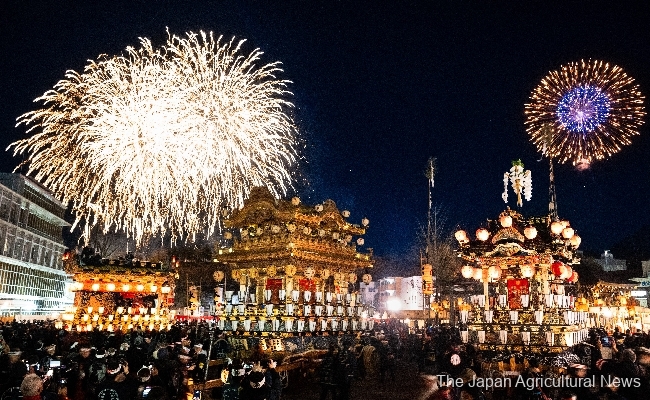
The six massive floats gather in front of the city hall in Chichibu, Saitama Prefecture, and fireworks are launched as the Chichibu Yomatsuri night festival comes to an end.
SAITAMA, Dec. 8 — Chichibu Yomatsuri, an annual night festival with a history going back more than 300 years, was held in Chichibu, Saitama Prefecture.
The festival, which honors silkworm farming that had thrived in the district, is regarded as one of the three major float festivals in Japan. The other two are Kyoto Gion Festival in Kyoto Prefecture and Hida Takayama Festival in Gifu Prefecture.
The Chichibu festival fascinates visitors with its spectacular, ornate floats and fireworks lighting up the winter sky.
At 6 p.m. on Dec. 3, the day when the main festival was held, people pulling the floats shouted “Horyai!” along with the rhythmical sounds of Japanese traditional festival music performance, as they proceeded slowly down the streets in the city.
The largest float measured around 7 meters in height and weighted some 20 tons.
A market selling local crafts and specialties, reminiscent of the silk market of the past, opened the same day on the street near Chichibu Shrine.
Yuhei Kume, 36, head of a group of sericulture farmers belonging to JA Chichibu, a local agricultural cooperative, was at the market, calling on visitors, “Welcome! Would you like to try spinning a thread?”
Kume, who organized a lantern making event at the market, is the only silkworm farmer in the city.
There were more than 8,000 silkworm farms in the Chichibu area around 1940 when silk farming was at its peak, shipping a total of roughly 1,800 tons. However, only two members remain in JA Chichibu’s sericulture farmers’ group.
When the sericulture industry had been booming, a big silk trading market used to be held in Chichibu every year around this time when shipping of cocoons end, attracting a large number of people in the industry.
The night festival grew in scale along with the development of the market and is handed down to the present day.
Chichibu Ondo, a folk dance performed during the festival, describes the feelings of farmers who finished shipping cocoons and sowing wheat, all ready for the winter night festival.
After the six floats gathered at an open space in front of the city hall, approximately 4,000 fireworks were launched as the highlight of the festival.
“When I see the fireworks at the night festival, I feel grateful for the fact that this year’s sericulture was completed without problems,” said Kume, looking up at the night sky.
On the following day, a ceremony to pray for the prosperity of sericulture was held at Chichibu Shrine in the presence of JA officials and silkworm farmers.
They dedicated a kilogram of cocoons to the shrine and offered prayers, expressing gratitude for being able to conduct silk farming this year and hopes for revitalization of silk production.
Yoshio Takizawa, head of JA Chichibu who attended the ceremony, said, “We will continue supporting silkworm farmers also from the standpoint of preserving the traditional sericulture ceremony.”
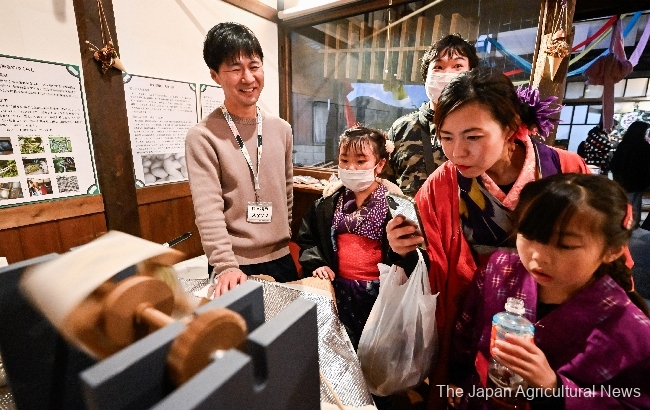
Visitors at a market held during the Chichibu Yomatsuri festival looks at the process of taking threads from cocoons.